
Tree Work
Tree Removal & Trimming
Most tree calls here are one of three things: a pine that has started leaning since the last storm, an oak whose limbs are now sitting on a roof, or a tree standing exactly where a driveway or pool deck is about to go.
We take trees down and we cut them back, on the same properties where we build. That matters more than it sounds — the crew removing a tree next to a paver drive is the crew that knows what that drive cost and how it is edged.
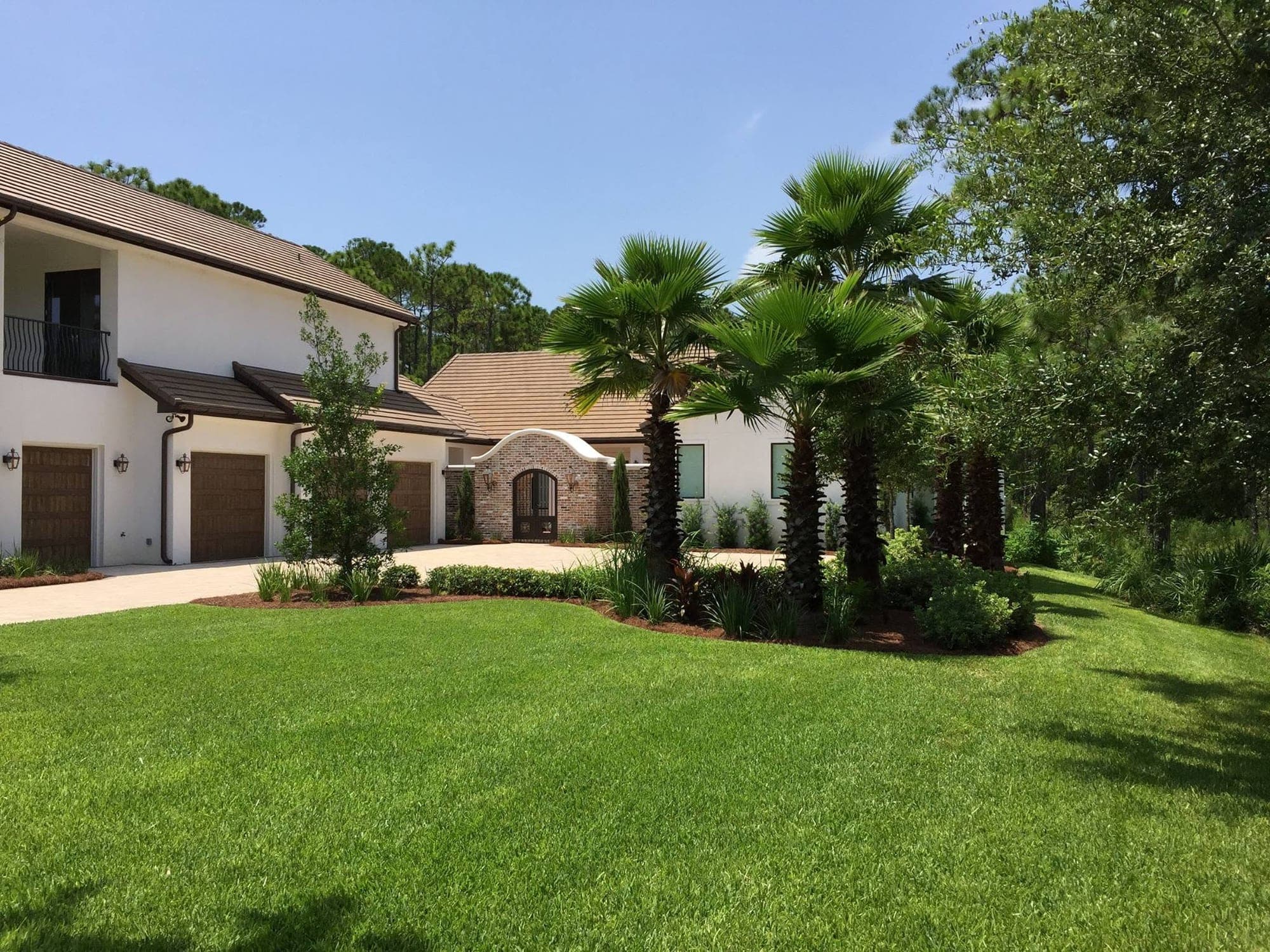
What tree work covers
- Removal of dead, dying, leaning or storm-damaged trees
- Sectional removal where a tree cannot simply be felled
- Crown thinning, crown raising and deadwood removal
- Clearance pruning away from roofs, gutters, drives and structures
- Palm trimming and spent frond removal
- Cabling and bracing for trees worth keeping rather than losing
- Clearing trees standing in the footprint of new hardscape or paving
- Haul-off of all wood and debris, and clean-up of the work area
How we price it
Free on-site estimate
Priced per tree after a site visit, because size is the whole story and size doesn't photograph reliably. Height, lean, what is underneath it and how close a truck can get set the number far more than species does.
What moves the number
- Height and canopy spread of the tree
- Which way it leans, and what it would hit
- What sits underneath — roof, pool, fence, power
- How close a truck and chipper can get to it
- Whether the stump is being ground and the debris hauled off
Warranty
Insured to $2 million
Removal is not a product with a workmanship warranty — what protects you is the insurance behind the crew. We carry general liability cover to $2 million and provide a certificate on request. Ask any tree company for one before work starts, including us.
How it works
From assessment to a cleared site
- 1Week 1
Site visit & assessment
We look at lean, root plate, deadwood and what is underneath — roof, pool, pavers, septic, fence. That assessment decides whether a tree gets felled, taken in sections, or kept and pruned.
- 2Week 1
Written quote
One price per tree, with the debris haul-off included rather than added afterwards. If we think a tree can be saved instead of removed, we will say so in the quote.
- 31–2 weeks where required
Permits & notifications
Some parcels and communities restrict removal. We confirm what applies to your address before scheduling rather than discovering it on the day.
- 4Day 1
Access & protection
Plywood and mats over pavers and lawn on the approach, and a drop zone marked before the first cut. Most damage on a tree job happens getting the equipment in, not taking the tree down.
- 5Days 1–2
Removal or pruning
Felled whole where there is room, rigged down in sections where there is not. Pruning cuts are made at the branch collar so the tree can seal them.
- 6Final day
Haul-off & clean-up
Wood and brush off site, the drop zone raked, and hard surfaces blown clean. You should not be able to tell where the debris landed.
How the work is done
There is no material list on a removal — the job is access, rigging, and controlling where the weight goes. On pruning, the cut location is what matters. A cut made at the branch collar seals over; one made flush to the trunk leaves a wound that decays inward for years, which is the single most common thing we are called back to fix on someone else's pruning.
Built for here
What tree work has to account for on this coast
Storm season sets the calendar
Panhandle pines shed limbs and snap in summer storms, and the week after a named storm every tree company in Walton County is booked. A leaning pine noticed in March is a scheduled job; the same pine in September is an emergency, if anyone can get to it at all.
Sand changes how a tree fails
A root plate in coastal sand does not hold the way it does in clay. Trees here lean and lift rather than snapping, which is why a tree that looks upright can still be unsafe — the tell is the soil heaving on the opposite side, not the trunk.
Rules vary by parcel and community
Removal restrictions differ between unincorporated Walton County, the incorporated towns, and the 30A communities with architectural review. We confirm what applies to your specific address before scheduling.
What is underneath decides the method
A tree over open lawn comes down in one piece. The same tree over a paver pool deck, a screen enclosure or a septic drainfield gets rigged down in sections, which takes longer and costs more — and is cheaper than the alternative.
Tree removal questions
Do you grind the stump as well?
Yes, in-house. Our own grinder, our own crew — it is not subcontracted out and it does not need a second company scheduled behind us.
Do you handle storm damage and emergency removals?
No. We don't run emergency or after-hours storm call-outs, so if a tree is on your house right now you need a company that does. We do handle storm cleanup, debris haul-off and removals during normal working hours once the emergency has passed — see our storm cleanup page for how that is scheduled after Hurricane Isaias.
Do I need a permit to remove a tree on my property?
It depends on the parcel and, in the 30A communities, on architectural review. Rules differ between unincorporated Walton County and the incorporated towns. Tell us the address and we will confirm what applies before anything is scheduled.
Can you take down a tree that is close to the house or pool?
Yes — that is what sectional removal is for. The tree comes down in pieces that are rigged and lowered rather than dropped, so nothing lands where it should not. It takes longer than felling and is priced accordingly.
What about branches touching the power line?
The line from the pole to your house is generally the utility's responsibility, and we will tell you to call them rather than quoting it. We work on the property side of that boundary.
Will your equipment damage my lawn or pavers?
We mat the approach before anything heavy crosses it. Say so up front if there is irrigation, a septic drainfield or new paving on the route in, because the access plan is easier to change before the day than during it.
Should this tree come out, or can it be saved?
Often it can. Thinning a crown, removing deadwood, or cabling a weak union will keep a tree that is worth keeping. We will say when removal is genuinely the answer and when it is not.
Guides
Related services
Tree Work near you
Got a tree you are not sure about?
Send a photo of the trunk and what is underneath it, and we'll tell you whether it is a removal, a prune, or something to watch.