
Palms & Planting
Palm Trees & Palm Installation
A palm is the most visible thing you will plant. It is also the easiest to get wrong, because the species that thrive in Naples will die in a Panhandle cold snap, and the ones sold at big-box stores are usually chosen for shipping rather than survival.
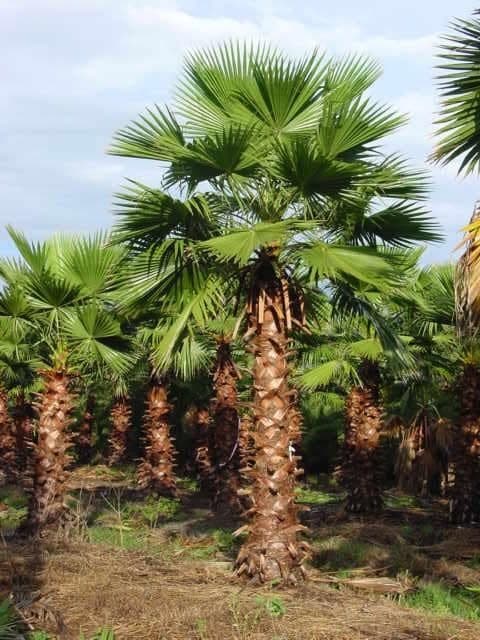
We grow and hold our own stock on Highway 331 in Freeport. You can walk the rows, tag the exact trees for your project, and know they were dug the morning they were planted rather than trucked in from four hours away.
What's included
- Nursery walk to select and tag your specific trees
- Species recommendation matched to cold hardiness and salt exposure
- Delivery from our Freeport nursery, dug the day of planting
- Hole excavated and backfilled with amended native soil
- Root ball set at the correct depth — the commonest planting error
- Bracing on new palms until roots anchor
- Irrigation adjusted or a dedicated bubbler added at the root ball
- Written establishment watering and fertilising schedule
How we price it
Free on-site estimate
Priced per tree by species and size, installed. Because the nursery is ours you can see the actual tree and its price before you commit to it — no ordering blind from a size on a list.
What moves the number
- Species, and how fast it grows to the size you want
- Caliper and overall height — the jump between grades is steep
- How many you're planting, and how close together
- Access for the machine that has to set the root ball
- Whether irrigation needs extending to reach the new planting
Warranty
1 year on plants and trees
One-year warranty on palms and trees where we also carry out the landscape maintenance, so we can be sure the watering is right. Establishment failures here are almost always a watering problem, not a tree problem.
How it works
From nursery row to planted
- 1Week 1
Site visit & exposure check
Salt exposure, wind, overhead lines and how much room the crown will need at maturity — all set before species.
- 2Week 1–2
Nursery walk & tagging
Walk the rows in Freeport with us and tag the actual trees. What you tag is what gets planted.
- 3Week 2
Fixed quote
Priced per tree, installed, with bracing and establishment watering included rather than added later.
- 4Day 1
Site prep
Holes excavated, utilities located, and backfill amended. Access for a large palm is planned, not improvised.
- 5Day 1–2
Dig, deliver & plant
Trees dug the morning they go in, set at the correct depth, backfilled in lifts and watered as they are filled.
- 6Final day
Brace, water & handover
Braced against wind, deep-watered, bubblers set, and a schedule handed over for the establishment period.
Species we grow and plant
Cold hardiness is the constraint that matters here. The Panhandle is meaningfully colder than peninsular Florida, and every winter there are palms lost in this area that would have been fine two hundred miles south.
Those four are what stands in our own rows right now, in a range of calipers and heights — come and pick the individual tree. Anything beyond that list we source through our growers, and you still approve the actual specimen before it is planted. We are expanding the nursery with the aim of holding a full range on site by 2027.
Cold hardiness in the Panhandle
| Reliable here | Marginal — protect it | |
|---|---|---|
| Typical species | Sabal palmetto, windmill, needle and pindo palms | Queen and coconut palms |
| Hard-freeze behaviour | Comes through with cosmetic damage at most | Crown damage, and losses in a bad winter |
| Best use | Structural planting you want permanently | Accent planting you accept may need replacing |
| Salt tolerance | Sabal and pindo handle Gulf-front exposure well | Varies — check per species before beachfront use |
Typical species
- Reliable here
- Sabal palmetto, windmill, needle and pindo palms
- Marginal — protect it
- Queen and coconut palms
Hard-freeze behaviour
- Reliable here
- Comes through with cosmetic damage at most
- Marginal — protect it
- Crown damage, and losses in a bad winter
Best use
- Reliable here
- Structural planting you want permanently
- Marginal — protect it
- Accent planting you accept may need replacing
Salt tolerance
- Reliable here
- Sabal and pindo handle Gulf-front exposure well
- Marginal — protect it
- Varies — check per species before beachfront use
Built for here
What palms are up against here
Panhandle winters
This coast gets hard freezes that peninsular Florida does not. Species selection is the whole game — a palm chosen for looks rather than cold hardiness is a purchase with an expiry date.
Planting depth
More palms are killed by being planted too deep than by cold. The root initiation zone must sit at grade, not buried. It is the first thing we check on a palm someone else installed that is failing.
Salt and wind on the Gulf side
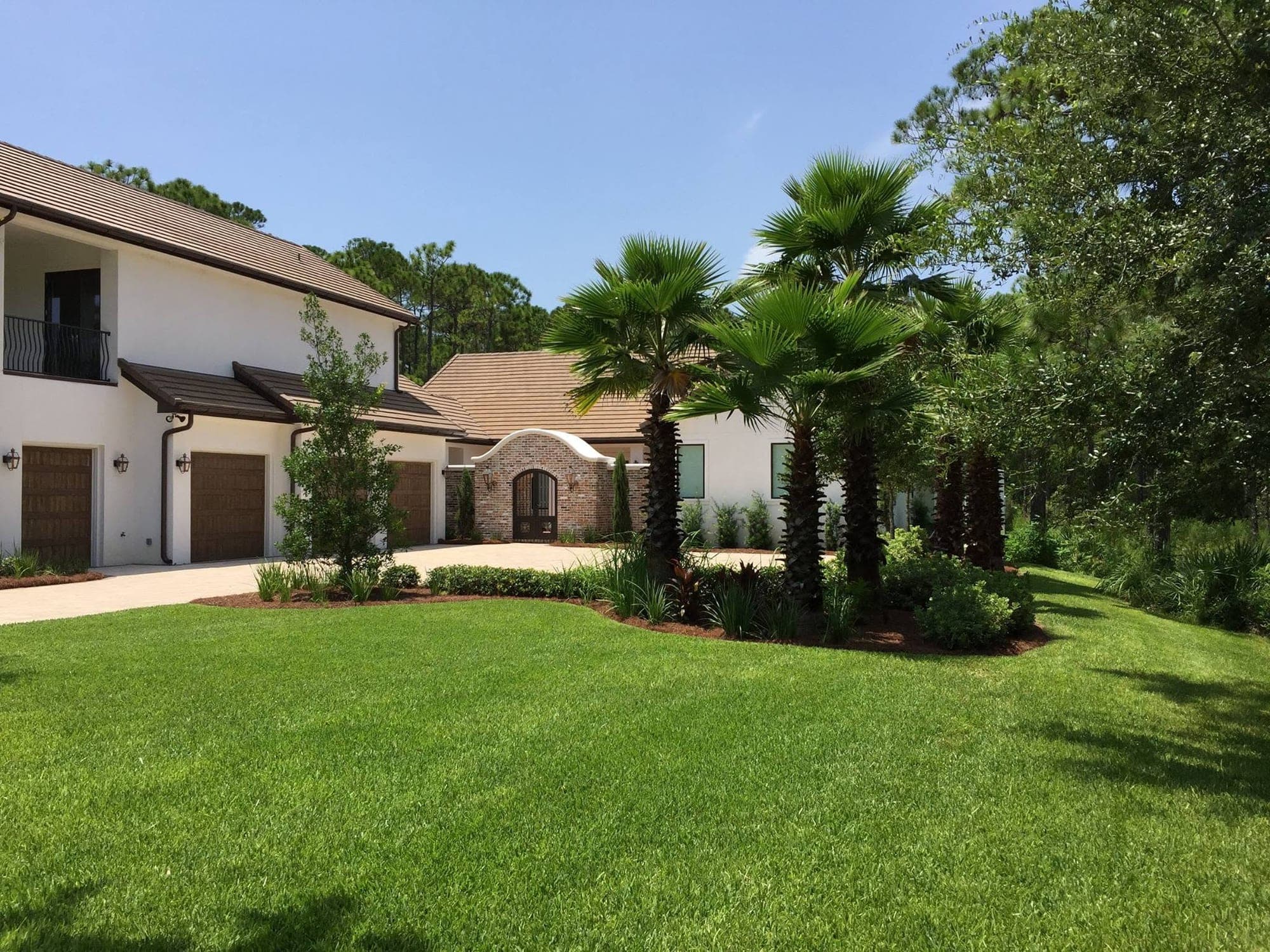
Beachfront palms take salt spray on the fronds and wind loading on the crown. Sabal and pindo handle it; several popular ornamentals do not, and will brown out within a season of being planted in the wrong spot.
Palm tree questions
Which palms survive Panhandle winters?
Sabal palmetto, windmill, needle and pindo palms all come through hard freezes reliably here. Queen and coconut palms are marginal to unsuitable this far north and should be treated as accent planting you may lose.
Can I pick the exact palm that gets planted?
Yes. That is the point of having our own nursery. Walk the rows in Freeport, tag the trees you want, and those are the ones that go in.
How long does a transplanted palm take to establish?
Six months to a year before it is properly anchored, and longer for large specimens. Bracing stays on through that period and watering matters far more in the first summer than afterwards.
Why is my existing palm turning brown at the centre?
Centre or spear decline usually means bud rot, a nutrient deficiency, or a palm planted too deep. It is worth diagnosing quickly — the crown is the only growing point a palm has.
Do palms need special fertiliser?
Yes. Palms are prone to potassium and magnesium deficiency in sandy soil, and ordinary lawn fertiliser makes it worse by pushing nitrogen without the rest. We hand over a palm-specific schedule.
How big a palm can you install?
Large specimens are routine — access is usually the real constraint, not the tree. We check equipment access on the site visit before quoting anything sizeable.
Guides
Related services
Palms & Planting near you
Come tag your palms
The nursery is on Highway 331 in Freeport, open Mon–Fri 8–5. Walk the rows with us and pick the exact trees.