
Landscape Design
Landscaping & Landscape Design
Most landscape jobs go wrong in the handoff. A designer draws a plan, an installer prices it, and by the time it is in the ground half the intent has been value-engineered out of it.
We design and build with one team. The person who draws your plan walks the site on installation day, and the plants come from our own nursery in Freeport, so what was specified is what gets planted.
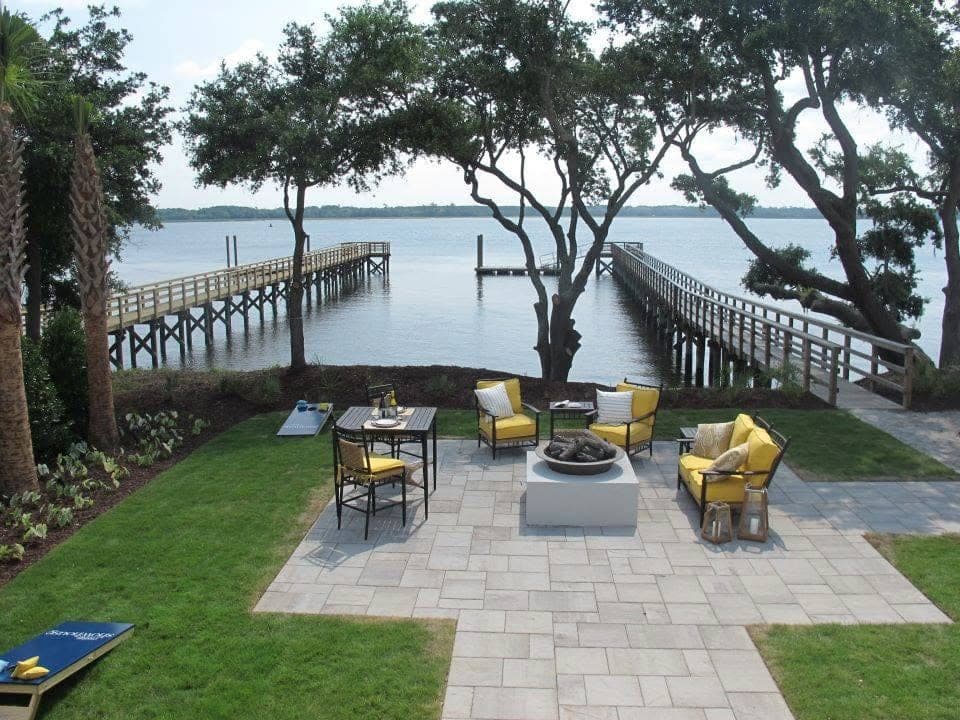
What's included
- Site analysis — sun, wind, salt exposure, drainage and existing trees
- Scaled planting plan with a species schedule, not just a sketch
- Bed layout, edging and soil preparation
- Grading and drainage corrections before anything is planted
- Trees, palms and shrubs grown and held at our Freeport nursery
- Mulch or pine straw, installed to the correct depth
- Coordination with irrigation zoning so beds and turf water separately
- Walkthrough with a care schedule for the first season
Design fee
No charge for design
We don't bill for design. We meet you at the property, lay the plan out on the ground with you, and establish what you actually want before anything is priced. Installation is then quoted as one written number after that visit.
What moves the number
- Size of the planted area and how much of it is new bed
- Plant sizes — the same layout in larger stock costs materially more
- Demolition and haul-off of existing grass, shrubs or trees
- Grading, drainage and how much soil has to be brought in
- Whether irrigation is being installed or extended at the same time
Warranty
1 year on plants and trees
One-year warranty on plants and trees where we also carry out the landscape maintenance, so we can be sure the watering is right. Without that, plant losses aren't covered — most of them come down to water.
How it works
From site analysis to first season
- 1Week 1
Site visit & analysis
Sun, wind, salt, drainage and what is already growing well — the existing plants tell us more than a soil test does.
- 2Week 2–3
Design & plant schedule
A scaled plan with named species and sizes, so you know exactly what is going in and how big it will be.
- 3Week 3
Nursery walk
Come to Freeport and tag the actual trees and palms for your project. Most contractors cannot offer this.
- 4Days 1–2
Grading & drainage
Grades corrected and drainage fixed first. Planting into ground that holds water is money spent twice.
- 5Days 2–5
Bed prep & planting
Beds cut and edged, soil amended, then trees and palms set first and understorey planted around them.
- 6Final day
Mulch, water-in & walkthrough
Mulched to depth, watered in, irrigation adjusted to the new planting, and a care schedule handed over.
Plants & materials
Our own nursery on Highway 331 grows and holds the palms and trees we plant, which means stock is acclimatised to this coast and is dug the morning it goes in the ground rather than trucked in from elsewhere.
Pine straw suits acid-loving beds and the inland lots; shredded hardwood holds better on slopes and in wind. We use both and will explain which your beds want.
Built for here
What planting is up against here
Salt on the Gulf side, shade on the bay side
South of 30A the palette is dictated by salt spray. North toward the bay and the dune lakes, shade, moisture and native scrub change it completely. We plan for which side of the road you are on rather than applying one list to both.
New-construction lots stripped to sand
Around Freeport and Hammock Bay, new lots are often scraped to bare sand with the topsoil gone. Beds there need soil built back before anything will establish, and skipping that step is why so many new-build landscapes look tired by year two.
Hurricane season
Newly planted trees have no root anchorage. We stage large tree and palm planting outside peak storm season where the schedule allows, and brace what goes in during it.
Recent landscape work
View portfolio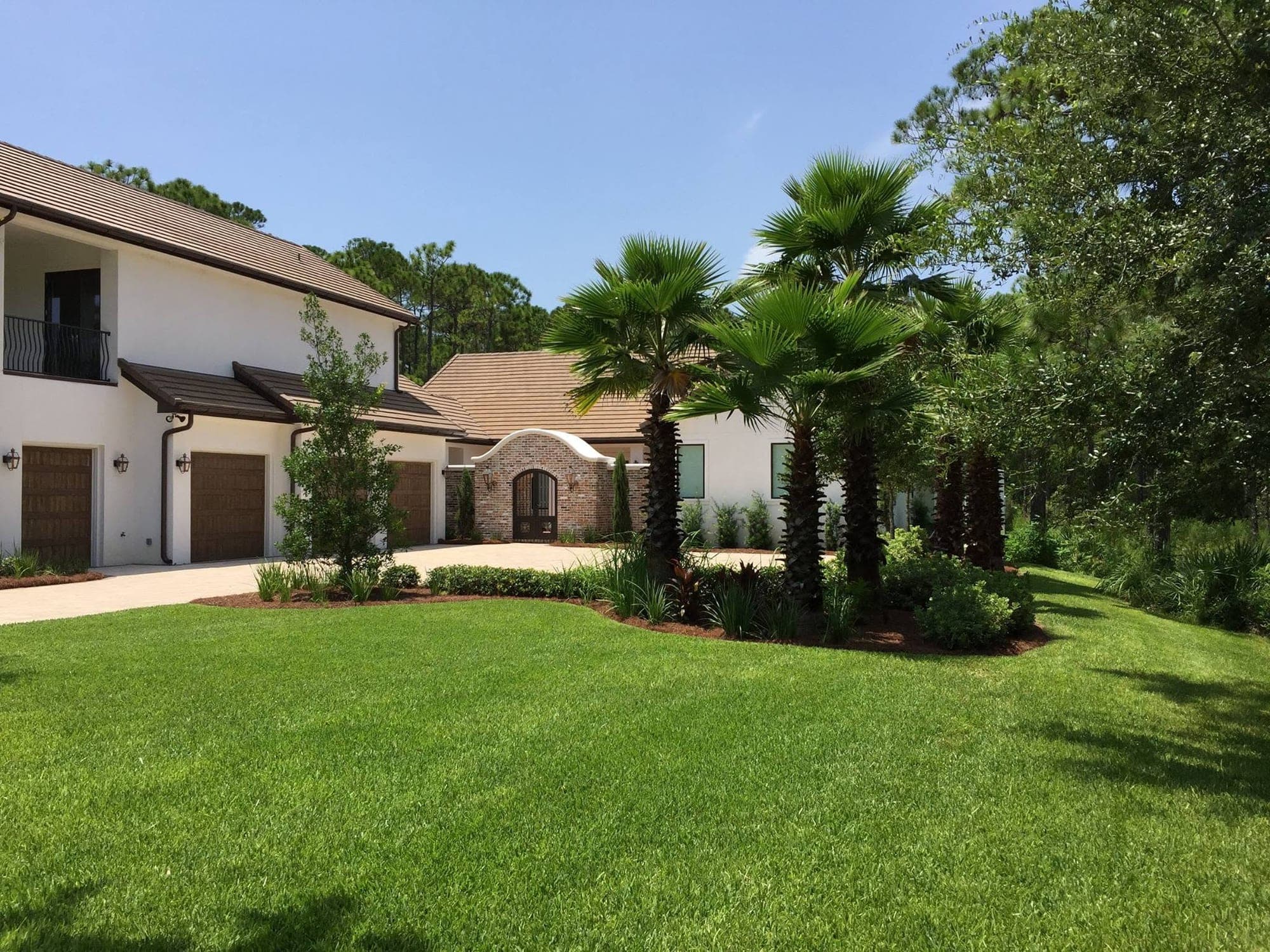
Landscape design questions
Do I need a design, or can you just plant?
For a bed refresh, just plant. For anything involving grading, drainage, tree placement or a whole property, a plan pays for itself — it stops you buying the wrong plants twice.
What plants actually survive beachside here?
Salt-tolerant palms, hollies, muhly grass, and coastal natives. Gulf-front yards get a tighter palette than bay-side ones, and we will walk you through both rather than handing over a generic list.
Can I see the plants before they go in?
Yes. That is what the nursery is for. Walk the rows with us in Freeport and tag the specific palms and trees for your project.
When is the best time to plant here?
Autumn and early spring give roots time to establish before summer heat. Palms prefer the warm months. Most planting can happen year-round with the right aftercare, but timing changes the watering demand a great deal.
Do you do maintenance after installation?
Yes — landscape and irrigation maintenance, residential and commercial, everywhere we install. It is also what the one-year plant warranty depends on, because we can only stand behind planting whose watering we control.
How long until it looks established?
Beds read as finished immediately if they are planted at the right density. Trees and palms take a season or two to settle and start putting on growth you notice.
Planning a landscape?
Send photos of the property and tell us what is not working — we'll walk it, sketch a plan, and quote the whole thing.