
Brick Pavers
Brick Paver Installation
Pavers are the right surface for this coast. They flex with sandy ground instead of cracking, they shed water through their joints, and when something does move you lift the affected area and relay it rather than tearing out a slab.
We install every paver surface on a residential property, and we repair paver work other contractors left behind. This page is the hub — each surface has its own page with process, materials and pricing detail.
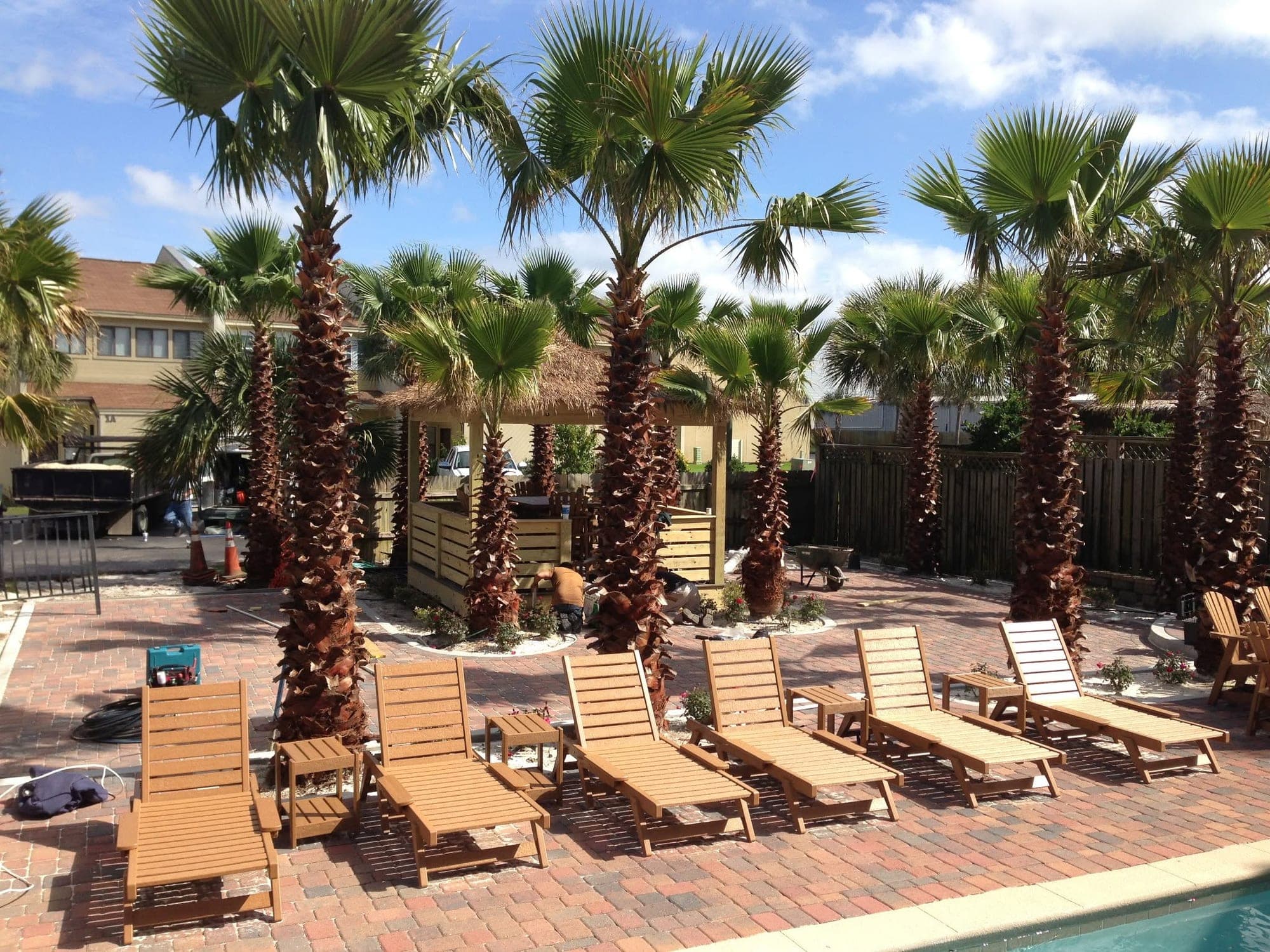
What paver work covers
- Driveways and drive courts, including aprons and right-of-way tie-ins
- Patios and pool decks with coping and drainage
- Walkways, entry walks and garden paths
- Seat walls, borders and pillar bases
- Repair, re-leveling and re-sanding of existing pavers
- Sealing and restoration of faded or stained surfaces
- Permeable paver systems where drainage is the constraint
- Removal and haul-off of the surface being replaced
How we price it
Free on-site estimate
We don't publish a square-foot rate, because no honest one exists — two driveways of identical size can differ by half again. We measure the job, then give you one written price.
What moves the number
- Paver style, colour and size — the material spread is wide
- New construction versus rebuilding over an existing surface
- Demolition and haul-off of grass, shrubs, trees or old concrete
- Slope, backfill and how much regrading the drainage needs
- Access for machinery, which decides how much is done by hand
Warranty
2 years on workmanship
Two-year workmanship warranty in writing, plus the manufacturer's one-year warranty on the pavers themselves.
How it works
The same build sequence on every paver job
- 1Week 1
Site visit & measurements
We walk the site, check grades and drainage, and measure. Out-of-state owners can do this by video call.
- 2Week 1–2
Design, samples & fixed quote
Pattern, border and colour chosen from physical samples at our Freeport yard, then one written price.
- 31–3 weeks lead
Materials & permitting
We order from Belgard, Tremron, Pavestone or Unilock and handle county permitting and utility locates.
- 4Days 1–2
Excavation & base
Old surface out, geotextile down, limestone base compacted in lifts to a depth matched to the load above it.
- 5Days 2–4
Laying, cutting & edging
Pavers set to pattern with clean cuts at borders and curves, locked in with concrete or paver edge restraint.
- 6Final day
Sand, compact & walkthrough
Polymeric sand swept and compacted twice, site cleaned, and a walkthrough with you in person or on video.
Materials & brands
We install Belgard, Tremron, Pavestone and Unilock concrete pavers, plus clay brick where the architecture calls for it. Thickness is matched to use — 60 mm minimum under vehicles, thinner profiles acceptable on foot traffic only.
Colours read differently in coastal light than in a catalog, so we bring physical samples to every design conversation.
Built for here
What paver work has to survive on this coast
Sand that won't hold a base
Coastal sand migrates. A base compacted once and forgotten will wash down into the subgrade and take the surface with it. We compact in thin lifts over geotextile fabric on every job, which is why most of our repair calls are for someone else's work.
Salt exposure
Concrete pavers cure denser than poured slabs and shrug off the salt that spalls ordinary concrete. That is why they are the default surface in the beachfront communities along 30A and Scenic Gulf Drive.
County permitting & HOA review
Less than people expect. Paver work itself does not generally need a county permit here — that threshold is for permanent structures such as a building, garage or house. The exception is Okaloosa County, which does require a permit and approval for driveway apron and right-of-way work in Destin. What catches most projects instead is HOA architectural review, which most 30A communities apply to hardscape before work starts. We prepare those submittals and confirm the county position for your address before quoting.
Brick paver questions
How long do brick pavers last?
Decades, when the base is right. The pavers themselves outlast the installation — nearly every paver failure we are called to fix is a base or drainage problem, not a problem with the paver.
Are pavers more expensive than concrete?
Up front, usually yes. Over the life of the surface the comparison narrows, because a cracked slab has to be replaced while a settled paver area is lifted, re-based and relaid using the original pavers.
Can pavers be installed over an existing concrete slab?
Sometimes, if the slab is sound, drains correctly and the added height still works at doors and thresholds. We check all three on the site visit before recommending it.
Do pavers need sealing?
Not structurally. Sealing deepens colour and makes stains easier to lift, and it needs redoing every few years. We will tell you honestly whether your surface benefits from it.
What is polymeric sand and why does it matter?
It is joint sand with a binder that hardens after wetting. It resists weeds and washout far better than plain sand, which matters a great deal on a coast that gets hard, fast summer rain.
Can you match pavers on an existing patio or driveway?
Usually. We identify the manufacturer and line, and where it has been discontinued we propose the closest current match with samples side by side before you decide.
Planning paver work?
Send photos of the space and rough dimensions — we'll tell you what the base needs and put a fixed number on it.